
In this article, we’ll break down the three main ways infant formula is produced — white label, toll, and owned manufacturing — so you can better understand what’s behind the formula label and why it matters for your baby.
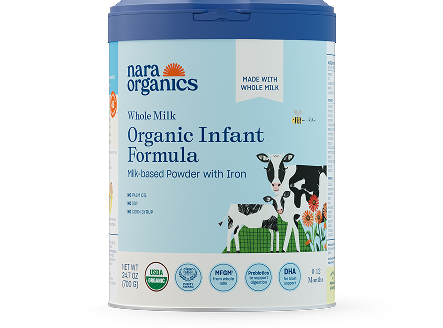
1. Toll Manufacturing: Nara Organics uses toll manufacturing in Germany to produce its Organic Whole Milk Infant Formula. Toll manufacturing means Nara owns and controls its unique recipe, and a specialized manufacturing facility produces the formula to Nara’s exact specifications.
2. White Label Manufacturing: Many infant formulas on the market are white labeled, meaning they use a common recipe developed by manufacturers that, with minor changes, can be customized to the needs of each brand. White label was not an option for Nara because they developed a completely unique formula with the most whole milk of any U.S. formula.
3. Owned Manufacturing: When a company owns an FDA-registered manufacturing facility, as well as their formula recipe(s), they can make their proprietary recipes on their own equipment.
Toll manufacturing allows Nara to partner with a state-of-the-art German facility with over 70 years of experience making top European infant formulas, using cutting-edge technology and extremely strict safety procedures. This approach ensures that every can of Nara meets the highest standards for safety, quality, and nutrition.
Here are the key things every parent should know about formula manufacturing:
- Safety comes first: All formulas sold in the U.S. must meet strict FDA standards, but the manufacturing process can impact consistency and reliability.
- Brand isn’t everything: Many formulas may look different on the shelf but are made by the same manufacturer. Understanding who owns and makes the formula (and if it’s meaningfully different from other brands) can help you know what you’re really buying.
- Innovation vs. scale: Some formulas are unique recipes that prioritize new nutritional benefits, while others rely on existing formulations designed for quick, large-scale production.
Let's dive deeper into how (and where) infant formulas are made.
White label manufacturing for infant formula
White label manufacturing is when a formula manufacturer owns FDA-registered formula recipes and an FDA-registered facility. They agree to use their pre-existing formulations to make formula(s) for a third party — like a retailer or another brand.
The new brand can use a white label formulation exactly “as is,” or they can ask the manufacturer to make small customizations to a formula recipe. The changes must be small enough that the formula isn’t considered “new.” A new formula would mean the manufacturer has to run a new clinical trial.
Key points about white labeling:
White label manufacturing is essentially a turnkey solution. The manufacturer (not the brand) controls the entire end-to-end process: ingredient sourcing, production, packaging, testing data, and regulatory submission.
- White label manufacturing is the easiest and fastest way to bring a new formula brand to market. Because the manufacturer has a portfolio of previously FDA-registered recipes, the new formula brand doesn't have to go through the long processes of formulation development, ingredient qualification and sourcing, manufacturing compliance, clinical study, and FDA registration — the work has already been done by the private label manufacturer.
- White label manufacturers own all the intellectual property (i.e., formula recipes). Formula brands do not own these recipes; they pay the manufacturer for the finished goods and put their labels and logos on them. It may be possible to obtain an exclusive right to a “customized” recipe depending on their agreement.
- The white label manufacturer registers the formula label for the new brand with the FDA and takes responsibility for the finished goods. The new brand relies on the pre-existing clinical study data of the private label manufacturer's base formulation.
Some brands may refer to their white label manufacturer as their “co-manufacturer.” However, since the formulation is owned by the manufacturer, it’s more accurate to say that the white label company is the “manufacturer” and the new brand is the “seller.”
A white label cookie analogy
Let’s say you want to start a company that sells packaged cookies. You decide to work with a manufacturer you trust — they have deep experience making cookies at volume and they already have recipes, ingredients, and packaging equipment that meet food safety regulations.
You meet with your manufacturer and they present three different recipes they can make for your cookie company — all you have to do is apply your own brand name to the label. This is called a white label product. The manufacturer is allowing you to take advantage of its production scale and expertise and permitting you to sell the product under your brand name.
Another option is to “customize” your recipe. You like the chocolate chip recipe, but you want to add white chocolate instead of milk chocolate. The manufacturer makes sure that they have a supplier for white chocolate chips and that the recipe still meets food safety requirements. You now have a white chocolate chip cookie to sell under your new brand.
Note that the customized recipe is still owned by the private label manufacturer, not you. In this instance, you may have a “distinguishable” product and might negotiate exclusivity. However, you don’t own the recipe.
Which companies white label infant formula in the U.S.?
Perrigo is the white label manufacturer for all store brand formulas in the U.S., including Target, Walmart, CVS, Walgreens, and Amazon. This includes formula brands like Up & Up, Parents’ Choice, and more.
Perrigo is also the white label manufacturer for Bobbie Organic Gentle as well as some other Bobbie formulas. For example you may find a Bobbie Whole Milk formula manufactured by Perrigo while another can is manufactured by Nature’s One. You can differentiate the formulas from either location by looking at the Nutrition Panel, Ingredient List, or Manufactured By information on the can label.
Currently, Perrigo is the only infant formula white label manufacturer in the United States. They are one of the three big American formula makers and contribute significantly to the formula supply in this country.
Is white label manufacturing good or bad?
White label manufacturing is an important way to get high-quality infant formula into families’ hands nationwide at scale.
Especially during the formula shortage in 2022, Perrigo was a key source of formula manufacturing in the U.S. Perrigo manufactures infant formula under many brand names, all of which meet FDA-required standards for nutrition and safety.
White label manufacturing is a great option for brands who want to quickly enter the infant formula market with a quality product, without needing to go through the long and expensive process of developing a unique formula, running a clinical trial, and going through the lengthy FDA registration process.
For families, white label manufacturing provides a cost-effective source of infant formula, all of which meet FDA standards for nutrition and safety.
Toll manufacturing infant formula
Toll manufacturing is when a formula company brings their own intellectual property (i.e., a unique formulation) to a manufacturer. After researching and developing a unique formulation, the company will work with a large-scale commercial manufacturer to produce their infant formula.
They pay a “toll” to the manufacturer in order to use the equipment and facility to make their unique infant formula. The toll manufacturer provides the usage of their facility and staff to support the manufacturing of the product. The brand is responsible for formulation development, ingredient sourcing, clinical study, and the FDA registration.
Therefore, the ownership of the formulation and its data belongs to the new brand — not the manufacturer.
Key points about toll manufacturing:
- Toll manufacturing requires a formula company to have a unique formulation that they own the right to manufacture.
- Toll manufacturing is the best choice when a company has a proprietary/innovative formula and needs to protect their formulation.
- The formula brand controls the sourcing of every ingredient to make their formulation.
- Before manufacturing, the formula company is responsible for conducting a clinical trial and getting FDA approval. The formula company is also responsible for all regulatory communications and registrations, including testing.
- Toll manufacturing is not turnkey. This option requires oversight quality, safety, and a tight supply chain management — all requiring significant time and cost investment.
A toll manufacturing cookie analogy
Let’s say you’ve created an incredible cookie recipe. These cookies are the best anyone has ever tasted, and you want to bring these cookies to everyone in the country. You can’t do this from your own kitchen, so you need a manufacturer who can produce at volume. However, before you manufacture, you want to protect your rights, so you file a patent to own your recipe.
In this case, a toll manufacturer makes the most sense. They don’t make versions of their own recipes — they'll make your patented recipe to your specifications. They’ll use the ingredients you supply, and they’ll sign a strict confidentiality agreement in order to protect your proprietary recipe. The toll manufacturing partner only provides the use of the facility and staff.
Once you manufacture the product with your toll manufacturer, your delicious cookies are now ready for the world.
Which companies toll manufacture infant formula in the U.S.?
Theoretically, any registered formula brand can make a product for another brand, however, this is not common in the U.S. Nara was looking for a reliable partner with infant formula manufacturing experience with a high-quality manufacturing environment. After an exhaustive search, Nara partnered with a excellent German manufacturer.
Is toll manufacturing good or bad?
Toll manufacturing is a great choice as it allows companies with unique or innovative formulas to produce them and bring them to families without owning a facility. Although relatively more time consuming and expensive, toll-manufacturing offers market entry for truly innovative start-up brands without the cost of owning a manufacturing facility.
Expanding the formula manufacturing capacity in the U.S. has been in the news and is part of Operation Stork Speed. Increasing toll manufacturing in the U.S. would be one way to help increase capacity here at home without forcing small formula brands to take on the significant investment required to own a manufacturing facility.
Owned manufacturing infant formula
The third type of formula manufacturing in the U.S. is owned manufacturing. This is when a formula company owns its manufacturing facilities and makes its own formulations on their own equipment. They must source their own ingredients and coordinate their quality and safety testing.
Which infant formula companies own their manufacturing in the U.S.?
Building and maintaining an FDA registered infant formula factory is an enormous financial investment. The three biggest manufacturers are:
- Abbott Nutrition (Similac formulas)
- Mead Johnson Nutrition (Enfamil formulas)
- Perrigo Company (Good Start & white label formulas)
Two smaller formula companies have also ventured into running their own facilities:
- ByHeart (not currently producing formula after a nationwide recall) purchased a facility in Oregon and went through the FDA approval process. Their owned manufacturing launched in 2022.
-
In 2023, Bobbie purchased Nature’s One, a pediatric nutrition company. Bobbie purchased both the factory in Ohio and Nature’s One intellectual property. This allowed them to use existing Nature’s One recipes to produce some of their formulas. You can differentiate which formula is manufactured at which location (Nature's One vs. Perrigo) by looking at the Nutrition Panel, Ingredient List, or Manufactured By information on the label.
Particularly after the 2022 formula shortage, other international formulas became available in the U.S. to help stabilize formula supply. Some of them have their own manufacturing and also use a mixed strategy where they may also toll manufacture some products:
- Bubs Australia Ltd.
- Danone
- Kendal Nutricare Ltd
- The a2 Milk Company
An owned manufacturing cookie analogy
Your family has owned a popular cookie company for three generations. You run a large corporation that owns a manufacturing facility and has many proprietary cookie recipes. You even have an innovation team that works on new products and flavors. Your family’s cookies are sold across the country and are eaten by millions of people every year. To protect your intellectual property, you don’t allow other brands to replicate your recipe by exclusively using your own manufacturing facility.
Is owned manufacturing good or bad?
The large formula manufacturers in the U.S. produce essential food for babies at a large scale, and they are the biggest source of formula for American babies. They also provide all of the infant formula needed for the WIC program.
The flip side is that U.S. formula manufacturing is concentrated within a handful of companies. This limits innovation, particularly as it does not keep up with consumer-driven trends.
This situation also carries some risk as we saw during the formula crisis. In 2022, Abbott issued a voluntary recall because of a Cronobacter outbreak linked to powdered infant formula. Abbott is the largest formula manufacturer in the United States, so the recall — compounded by Covid-19 supply chain issues — caused a nationwide formula shortage.
How do you tell where formulas are made?
Where a formula is manufactured is always shown on the formula can label, usually on the back under the ingredient or nutrition information.
For white label manufactured formula:
- The manufacturers statement will say: “Manufactured by X” where X is not the brand name.
- For example, for Walmart’s Parent’s Choice brand (manufactured by Perrigo), the label will say, “Manufactured By: PBM Nutritionals, LLC”
- For Bobbie’s Organic Gentle (manufactured by Perrigo), the label will say, “Manufactured By: PBM Nutritionals, LLC”
For toll manufactured formula:
- The manufacturer’s statement will say “Manufactured For: X” where X is also the brand name or the manufacturer’s name.
- For example, for Nara’s formula, the label will say, “Manufactured For: Nara Organics, Inc.”
For owned manufactured formula:
- The manufacturer’s statement will say: “Manufactured by X” where X is also the brand name or the manufacturer.
-
For example, for Enfamil formula by Mead Johnson, the label will say, “Manufactured By: Mead Johnson & Company, LLC”
How Nara Organics manufactures its infant formula
Nara uses toll manufacturing in Germany to produce Nara Organics Whole Milk Infant Formula.
Nara’s founder, Esther, wanted to raise the bar for infant nutrition. When Esther and her team of scientists and pediatricians began developing Nara, there were zero whole milk formulas available in the United States. In order to include the amount of milk fat that Esther wanted in Nara, the team had to apply for and get approval for a new designation from the FDA, which they received, allowing Nara to have the most whole cows' milk of any U.S. formula.
White Label was not an option for Nara
White label was not an option for Nara Organics because the recipe is completely unique. Owned manufacturing requires huge amounts of investment money. The Nara team knew they needed to work with a toll manufacturer.
Toll manufacturing isn’t available in the U.S. today, so the team looked at multiple facilities around the world, searching for a partner that could help them make the highest possible quality formula.
Nara is made at a state-of-the-art facility in Germany that has been making top European infant formulas for over 70 years. Nara’s German manufacturing partner has deep experience, uses cutting-edge technology, and follows extremely strict safety procedures.
Still reading? Now you know more than most people about formula manufacturing.
If you read this whole article, you know a lot more than most people about how infant formula is made. At Nara, we go deep because when it comes to infant formula, every detail matters.