
Your baby’s safety is one of your top priorities. Producing safe infant formula is one of ours. There are many different standards around the world regarding the safe manufacturing and composition of infant formula, and you may wonder which country sets the best infant formula standards. In this article, we’re covering the basics of the infant formula requirements in the United States (U.S.) and in the European Union (EU).
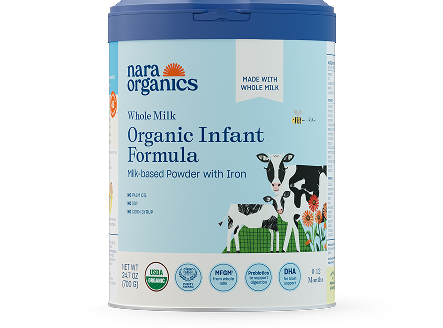
Did you know? Nara Organics is an American formula made in a state-of-the-art facility in Germany. Nara meets both U.S. and EU food safety standards for baby formula, some of the highest standards in the world.
Infant Formula Safety Standards: Heavy Metals
The EU enforces some of the world’s strictest limits on heavy metals in infant formula1, with the following established as limits for powdered infant formula in Europe:
Lead: 0.020 ppm
Cadmium: 0.010 ppm
Arsenic: 0.020 ppm
In the United States, EPA regulates heavy metals via mechanisms such as limits in drinking water and Prop 65 also provides limits for environmental contaminants including heavy metals. Based on the data from extensive testing and dietary exposure, the FDA will establish limits for heavy metals in infant formula as part of the Closer to Zero initiative. In the interim, some brands may choose to follow the EPA, Prop 65, or the international safety standards voluntarily.
Nara Organics Infant Formula meets the EPA, Prop 65, and the EU standards for heavy metals in powdered infant formula and has earned the Clean Label Project’s Purity Award, an award given to products that are top in their category for limiting heavy metals and other contaminants. Every batch of Nara Organics has shown non-detect or far below daily EU limits for heavy metals.
Infant Formula Safety Standards: Bacteria
European food safety regulations2 highlight that the risks of Salmonella and Cronobacter, two pathogenic bacteria, pose the greatest concern for infant formula. Concern for this risk is reflected in both the EU’s food safety standards and in the U.S. infant formula regulations3.
Both standards require manufacturers to test infant formula samples for these two specific types of bacteria, Salmonella and Cronobacter (formerly Enterobacter sakazakii), to ensure they are absent in formula. If the presence of these bacteria is detected at all, the formula isn’t considered safe and cannot be sold.
In addition, EU food safety regulations4 require microbiological testing for enterobacteriaceae (a broad group of organisms which indicate hygiene through the production process) and bacillus cereus (a spore forming bacteria which is responsible for the cereulide toxin).
If enterobacteriaceae is found in infant formula, under EU regulations the formula cannot be sold to infants. Bacillus cereus testing is required in the EU to meet certain levels, ie. the number of bacillus cereus spores must be below the required regulatory maximums. Under certain conditions, an excess of these spores may be able to produce cereulide toxin (the toxin responsible for the recent recalls in Europe). The EU has also recently introduced a limit of cereulide toxin.
In the United States, the Food and Drug Administration (FDA) is the primary agency responsible for ensuring the safety of infant formula. Each infant formula manufacturer is required by regulations to have systems in place so that infant formula does not become adulterated with microorganisms like pathogenic bacteria. Like in Europe, each manufacturer in the U.S. must test samples of infant formula before distribution to ensure that the formula’s samples are absent of cronobacter and salmonella.
Nara meets the EU requirements – and we go above and beyond. While neither the U.S. or the EU require testing for spore forming bacteria (like C. Botulinum), Nara performs voluntary testing (like screening for SRC and C. perfringens) on every batch of formula.
Infant Formula Safety Standards: Pesticides
Some pesticides are persistent in the environment and their residues can be found in food.
In Europe, limits are set for the amount of pesticide residues in infant formula, which is usually 0.01 part per million (ppm) per active substance – with limits for some residues even less (down to 0.006 ppm in some cases5). Manufacturers must ensure that the amount of pesticide residues does not exceed their respective threshold, therefore testing the formula for pesticide residues is essential.
In the United States, manufacturers must use ingredients that are generally recognized as safe (GRAS) or approved for use in infant formula. The Environmental Protection Agency (EPA) establishes the maximum amount of pesticide residues that are allowable on or in a food, including ingredients used in infant formula. Even though there aren’t specific limits set for pesticide residues for infant formula itself, the EPA regulates pesticides via other mechanisms such as limits in drinking water.
The use of organic ingredients also ensures that synthetic pesticides are not directly used in the production of these ingredients6. Nara uses carefully sourced organic ingredients produced without the use of synthetic pesticides.
Nara Organics meets European standards for pesticide residues and has earned the Clean Label Project’s Pesticide-Free Award.
Infant Formula Safety Standards: Other Contaminants
The FDA and EU have established limits on the amount of certain other contaminants that could be found in infant formula, like melamine, mycotoxins, certain PAHs, perchlorate, 3-MCPDE and glycidyl esters.
In general, the EU has adopted specific finished product (infant formula) testing on these contaminants at extremely strict limits. In the U.S., the regulatory framework is often a blend of protections with the FDA doing consumer foods monitoring (testing) as part of their whole diet studies to determine if overall levels in the food supply are becoming a problem such that direct food regulatory limits are required and EPA setting limits in other adjacent inputs like drinking water.
Some examples of these strictly regulated EU contaminants are as follows:

Manufacturing Facility Inspections
All infant formulas that are sold in the U.S. – regardless of where they are produced – must meet all U.S. requirements. The FDA inspects facilities that manufacture infant formula sold in the U.S. with trained investigators once a year, even if the manufacturing facility isn’t in the U.S.
Infant formula facilities must have audit plans available for inspection, which include steps the manufacturer must follow in order to comply with infant formula specific current good manufacturing practices (cGMPs). Under the Food Safety Modernization Act (FSMA), facilities must also have a written food safety plan, which details programs and procedures like hazard analysis, preventive controls, recall plans, and corrective action procedures.
Nara Organics Infant Formula is manufactured in Germany and sold in the United States, so it is regulated by both the FDA and the European Commission (EC). Therefore, Nara’s facility is inspected by the FDA and local EU government regulatory audits. In addition, Nara’s partner manufacturing facility is audited by an independent food safety certification body through yearly unannounced audits and typically receives A+ grades. When it comes to safety, more inspections and checkpoints are better, providing additional safety oversight.
Nutritional Requirements
Infant formula is the only manufactured food product that entirely meets the nutritional requirements of infants during the first year of life until infants are ready for the introduction of complementary foods. Because of this, it is essential that the nutrients provided in infant formula are adequate to fulfill an infant’s nutrient needs. In both the U.S. and the EU, the nutrient requirements for infant formula are strictly regulated and all batches of formula must meet the established nutrition standards.
The United States developed the Infant Formula Act of 1980 which was revised by the FDA and, in part, established the minimum and maximum levels of nutrients that must be found in infant formula. These regulations were later expanded to include additional nutrients, like the essentiality to include the nutrient selenium 2016. With the emergence of new scientific data over the last 40+ years and with the understanding of the importance of other nutrients (like DHA and oligosaccharides), infant formulas continue to evolve.
In fact, when the team started creating Nara Organics Infant Formula, there wasn’t any infant formula clinical study in the U.S. with whole milk; so there weren’t any FDA-registered whole milk infant formulas available in the United States. At that time, the team at Nara applied for a special designation from the FDA (called a GRAS notice) in order to be able to use the most organic whole milk of any U.S. infant formula.
The EU established nutrient requirements for infant formula placed on the market in Europe in 1991, and several changes have been made to those requirements since then. The EU's regulations7 include standards for the minimum and maximum level of DHA that must be found within infant formula -- a regulation that doesn't exist in the U.S. The EU also established a standard for the maximum amount of iron allowed in infant formula -- a standard that is much lower than what is found in the U.S.
Nara Organics Infant Formula meets U.S infant formula nutrition standards, and meets the EU's requirements for DHA in infant formula.
Nara Organics meets U.S. & EU safety standards for infant formula
FDA oversight is important for American families because it provides assurances that infant formulas are nutritionally adequate, supported by clinical studies, manufactured in facilities that follow good manufacturing practices, and families will be notified of any potential recall or safety issues.
Another reason against unofficial formulas is that the labels may be in a foreign language, which may require translation. Another difference is that the nutrient content information for European formulas must be expressed per 100 mL (instead of per 100 Calories, like in the U.S.), which can affect mixing instructions and also prevent comparing the nutrition content of similar formulas side-by-side as they are not expressed in a similar unit of measure. All of these aspects of European formulas could potentially introduce confusion and safety risk when choosing an EU formula that is not authorized for sale in the U.S.
Additionally, non-FDA registered European formulas imported to the United States by third-parties may not comply with regulations around shipping or safe storage – and if you buy directly from Europe, you may not get notified if your formula has a safety issue or recall.
American formula made in Germany: The best of both worlds
Nara meets all of the FDA’s quality, safety, and nutritional requirements for infant formula. Meeting the FDA’s requirements is a rigorous, time-consuming process (as it should be!), that requires a clinical study to ensure that infants will grow and develop just as they should. Because Nara is made in Germany, our formula also meets all of the EU’s food safety standards – important requirements that protect quality and safety.
Nara Organics Infant Formula is imported safely to the United States and inspected by the FDA before arriving at our U.S. distribution centers. From there, it’s shipped to customers. So there are no tariffs, no customs, and no shipping delays for Nara customers.

Chart references
- https://eur-lex.europa.eu/legal-content/EN/TXT/HTML/?uri=CELEX:32023R0915
- https://eur-lex.europa.eu/legal-content/EN/TXT/HTML/?uri=CELEX:32020L2184
- https://archive.cdc.gov/www_atsdr_cdc_gov/csem/polycyclic-aromatic-hydrocarbons/standards_and_regulations_for_exposure.html
- https://eur-lex.europa.eu/legal-content/EN/TXT/HTML/?uri=CELEX:32023R0915
- https://www.fda.gov/food/environmental-contaminants-food/perchlorate
-
https://www.epa.gov/sdwa/perchlorate-drinking-wate
-
https://eur-lex.europa.eu/legal-content/EN/TXT/HTML/?uri=CELEX:32023R0915
-
21 CFR 109.30(a)(8) : https://www.ecfr.gov/current/title-21/part-109#p-109.30(a)(8)
-
https://www.fda.gov/food/environmental-contaminants-food/dioxins-pcbs