Skip to content

Your Bag

Your bag is empty.

Shop Nara

All Articles > How to Tell Where an Infant Formula is Made

How to Tell Where an Infant Formula is Made

How to Tell Where an Infant Formula is Made

If you know where to look, you can see quickly where a formula is made. The formula manufacturer is always shown on the formula can label, usually on the back under the ingredient or nutrition information. 

Many formulas use white label manufacturing (what some brands call "co-manufacturing"), which can make it harder to understand who makes the formula, and which formulas are truly unique. 

Here are the 3 different ways manufacturing information will appear on a formula can label: 


1. White label manufactured formula: 

  • The manufacturers statement will say: Manufactured by X where X is not the brand name.
  • For example, for Walmart’s Parent’s Choice brand (manufactured by Perrigo), the label will say, “Manufactured By: PBM Nutritionals, LLC”
  • For Bobbie’s Organic Gentle (manufactured by Perrigo), the label will say, “Manufactured By: PBM Nutritionals, LLC” 

2.  Toll manufactured formula:

  • The manufacturer’s statement will say Manufactured for: Xwhere X is also the brand name or the manufacturer’s name.
  • For example, for Nara’s formula, the label will say, “Manufactured for: Nara Organics, Inc.” 

3. Owned manufactured formula: 

  • The manufacturer’s statement will say: “Manufactured by X” where X is also the brand name or the manufacturer. 
  • For example, for Enfamil formula by Mead Johnson, the label will say, “Manufactured By: Mead Johnson & Company, LLC” 


3 ways infant formula is manufactured


White Label Manufacturing: Many infant formulas on the market are white labeled, meaning they use a common recipe developed by manufacturers that, with minor changes, can be customized to the needs of each brand. 

Toll Manufacturing: This is when a formula company has a unique recipe, and they pay a “toll” to the manufacturer in order to use the equipment and facility to make their proprietary infant formula.

Owned Manufacturing: When a company owns an FDA-registered manufacturing facility, as well as their formula recipe(s), they can make their proprietary recipes on their own equipment. 


How Nara Organics manufactures its infant formula 

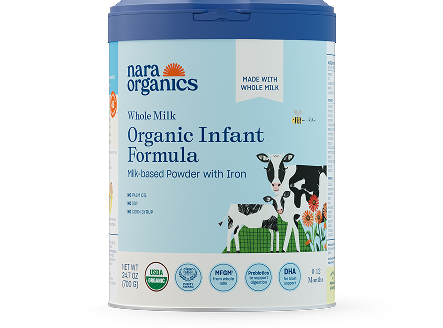
We use toll manufacturing in Germany to produce Nara Organics Whole Milk Infant Formula. 

Nara’s founder, Esther, wanted to raise the bar for infant nutrition. When Esther and her team of scientists and pediatricians began developing Nara, there were zero whole milk formulas available in the United States. In order to include the amount of milk fat that Esther wanted in Nara, the team had to apply for and get approval for a new designation from the FDA, which they received, allowing Nara to have the most whole cows' milk of any U.S. formula. 

White Label was not an option for Nara. 

White label was not an option for Nara Organics because the recipe is completely unique. Owned manufacturing was not an option because it requires huge amounts of investment money. The Nara team knew they needed to work with a toll manufacturer. 

Toll manufacturing isn’t available in the U.S. today, so the team looked at multiple facilities around the world, searching for a partner that could help them make the highest possible quality formula. 

Nara is made at a state-of-the-art facility in Germany that has been making top European infant formulas for over 70 years. Nara’s German manufacturing partner has deep experience, uses cutting-edge technology, and follows extremely strict safety procedures.  

At Nara, we believe toll manufacturing is a great option for innovative formula companies. It allows us to produce our unique whole milk recipe, while also having the partnership of an experienced manufacturing team in Germany.

When it comes to safety, more is more. 


Read more about infant formula manufacturing 

If you want more information about white label, toll, and owned manufacturing, you can read our full article on the different types of infant formula manufacturing

Disclaimer

The information on our website and in this blog is for informational purposes only. It is not intended to be medical advice or to substitute for the advice of your healthcare professionals. If you have questions about feeding your baby, your pediatrician is your best resource. They can help you understand the nutritional needs of your growing baby and guide you toward the best feeding choices for your family.
Meet The Nara Baby & Mom App
Share this article

Nutrition Facts & Ingredients

Ingredients

Nutrition Facts

Vitamins

Minerals

Feeding Guide

Select your baby’s age.
1-4 weeks (newborn)
Bottle size
½ - 1 oz at birth, increasing to 2-3 oz
Bottles per 24 hours
8-12 bottles
Monthly bundle size

We recommend starting with the

Based on 50/50 formula/breastmilk
Bottle size
½ - 1 oz at birth, increasing to 2-3 oz
Bottles per 24 hours
4-6 bottles (plus breastmilk)
Monthly bundle size

We recommend starting with the

1-2 month
Bottle size
4-5 oz
Bottles per 24 hours
6-8 bottles
Monthly bundle size

We recommend starting with the

Based on 50/50 formula/breastmilk
Bottle size
4-5 oz
Bottles per 24 hours
3-4 bottles (plus breastmilk)
Monthly bundle size

We recommend starting with the

3-4 month
Bottle size
4-6 oz
Bottles per 24 hours
6-8 bottles
Monthly bundle size

We recommend starting with the

Based on 50/50 formula/breastmilk
Bottle size
4-6 oz
Bottles per 24 hours
3-4 bottles (plus breastmilk)
Monthly bundle size

We recommend starting with the

5-6 month
Bottle size
6-8 oz
Bottles per 24 hours
4-5 bottles
Monthly bundle size

We recommend starting with the

Based on 50/50 formula/breastmilk
Bottle size
6-8 oz
Bottles per 24 hours
2-3 bottles (plus breastmilk)
Monthly bundle size

We recommend starting with the

6-12 month
Bottle size
6-8 oz
Bottles per 24 hours
4-5 bottles (plus solids!)
Monthly bundle size

We recommend starting with the

Based on 50/50 formula/breastmilk
Bottle size
6-8 oz
Bottles per 24 hours
2-3 bottles (plus breastmilk & solids)
Monthly bundle size

We recommend starting with the

Babies will regulate how much they eat according to their needs, so this is just a guide. On average, your baby should take in about 2½ ounces of formula a day for every pound of body weight. When caring for your twins, start by choosing double the usual monthly supply. As you evaluate how each baby feeds, you can change the amount of infant formula you order based on their needs. Always talk to your pediatrician if you have questions about your baby’s specific needs.

Nutrition Facts & Ingredients

Ingredients

Nutrition Facts

Vitamins

Minerals

Feeding Guide

Select your baby’s age.
1-4 weeks (newborn)
Bottle size
½ - 1 oz at birth, increasing to 2-3 oz
Bottles per 24 hours
8-12 bottles
Monthly bundle size

We recommend starting with the

Based on 50/50 formula/breastmilk
Bottle size
½ - 1 oz at birth, increasing to 2-3 oz
Bottles per 24 hours
4-6 bottles (plus breastmilk)
Monthly bundle size

We recommend starting with the

1-2 month
Bottle size
4-5 oz
Bottles per 24 hours
6-8 bottles
Monthly bundle size

We recommend starting with the

Based on 50/50 formula/breastmilk
Bottle size
4-5 oz
Bottles per 24 hours
3-4 bottles (plus breastmilk)
Monthly bundle size

We recommend starting with the

3-4 month
Bottle size
4-6 oz
Bottles per 24 hours
6-8 bottles
Monthly bundle size

We recommend starting with the

Based on 50/50 formula/breastmilk
Bottle size
4-6 oz
Bottles per 24 hours
3-4 bottles (plus breastmilk)
Monthly bundle size

We recommend starting with the

5-6 month
Bottle size
6-8 oz
Bottles per 24 hours
4-5 bottles
Monthly bundle size

We recommend starting with the

Based on 50/50 formula/breastmilk
Bottle size
6-8 oz
Bottles per 24 hours
2-3 bottles (plus breastmilk)
Monthly bundle size

We recommend starting with the

6-12 month
Bottle size
6-8 oz
Bottles per 24 hours
4-5 bottles (plus solids!)
Monthly bundle size

We recommend starting with the

Based on 50/50 formula/breastmilk
Bottle size
6-8 oz
Bottles per 24 hours
2-3 bottles (plus breastmilk & solids)
Monthly bundle size

We recommend starting with the

Babies will regulate how much they eat according to their needs, so this is just a guide. On average, your baby should take in about 2½ ounces of formula a day for every pound of body weight. When caring for your twins, start by choosing double the usual monthly supply. As you evaluate how each baby feeds, you can change the amount of infant formula you order based on their needs. Always talk to your pediatrician if you have questions about your baby’s specific needs.