
You've probably noticed the word "organic" on quite a few baby formula cans. But what does it actually mean for a baby formula to be certified organic? And does it matter — for your baby, your budget, and your peace of mind?
If you're asking whether organic infant formula is worth it for your baby, here's an honest answer: Yes — but with some important context that many formula brands don't spell out.
This article covers exactly what USDA organic means for infant formula, what it doesn't cover, why the whole milk vs. skim milk distinction matters more than most parents realize, and what to actually look for when comparing organic formula options.
What does "organic" actually mean for formula?
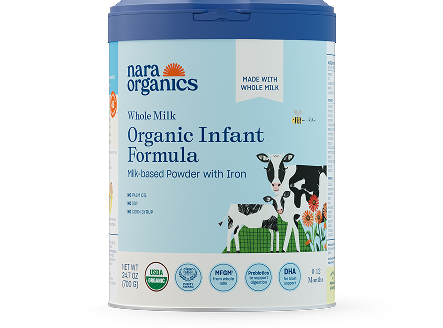
You’ll know a formula is certified USDA organic when you see the USDA organic seal. This is an important factor, as many formulas will mention organic ingredients, without having an entirely organic formula.
For a formula to earn the the USDA Organic Certification, it must meet a specific set of requirements:
- At least 95% of the ingredients must be certified organic
- The dairy source must come from cows raised without synthetic growth hormones or antibiotics, with required access to pasture at least 120 days a year
- Ingredients cannot be produced using synthetic pesticides or fertilizers
- Only a limited set of synthetic (non-organic) ingredients and processing aids are permitted
- Cleaning chemicals used on equipment must be compliant with organic standards (for example, quaternary ammonium compound based cleaners are severely restricted in use in organic production, due to fact they leave persistent chemical residues)
- GMO ingredients are not permitted
- All ingredients and the organic production handling system must be verified by third-party certifying agents.
That last point matters more than most people realize. The USDA Organic seal means an outside body has verified that the ingredients and production handling system support what’s on the label and what’s in the product—an essential element of accountability in a category where transparency isn’t always ubiquitous.
There are two other categories of formulas you may run into. One category is “Made with organic (ingredients).” If a formula does not contain the USDA seal but contains the words “made with organic (ingredients)”, it falls within this category. This category only requires 70% of ingredients to be organic.
Other formulas may simply list organic ingredients on the ingredient list, but not have any USDA seal or description that it is “made with organic (ingredients)”. This means it may be less than 70% organic, and may use other ingredients which would otherwise be prohibited by organic regulations, such as those containing prohibited synthetic pesticides or GMO.
So, is organic formula worth it?
For most parents, yes, with some important context.
Cleaner sourcing and lower exposure
The cleaner sourcing argument is real. Avoiding synthetic pesticides and harsh industrial solvents in the first year of life isn't about fear, and even non-organic formulas would meet maximum pesticide limits mandated by and determined to be safe by EPA and any residual solvent guidance limits (such as hexane used to extract non-organic oil). However, organic formulas are about choosing a lower-exposure option when one is available. Infants drink a lot of formula relative to their body weight, so even small differences in ingredient quality can add up over months of daily feeding.
A better omega-6 to omega-3 ratio
Organic dairy also tends to come from cows with better access to pasture. Research on organic dairy consistently shows higher levels of omega-3 fatty acids and a significantly better omega-6/omega-3 ratio compared to conventional dairy.³ DHA, the omega-3 fatty acid important for brain and eye development in early life, is also important. Nara formula contains plant-based DHA, ensuring levels similar to expert-recommended levels similar to that in global average of breastmilk.
What organic dairy doesn't certify
What USDA organic does not cover: the FDA, which regulates all infant formula under 21 CFR Parts 106 and 107, sets minimum and maximum levels for 29 nutrients that every formula must meet — organic or not.⁵ Organic certification governs ingredient sourcing and an organic compliant production and handling system. The FDA's framework governs nutrition and safety. They're separate systems, and the organic label doesn't tell you anything about the second one.
Not all organic formulas are created equal, and the label itself doesn't guarantee the formula has been recently clinically studied, sourced from whole milk rather than skim, or formulated with a fat profile that closely mirrors breast milk.
Organic is a meaningful floor, but it’s not a ceiling.
The question to ask isn't just is this formula organic? Instead, ask yourself, what do I know about how this formula was developed, and for whom?
The detail most parents miss: whole milk vs. skim milk
This is the detail most parents don't know to look for — and it makes a real difference.
Most infant formulas, including many organic ones, are made with skim milk and use vegetables oils as the fat source. This produces a formula that meets FDA nutrient requirements — but it changes the the fat composition.
Whole milk contains a structure that skim milk and vegetable oils do not: the milk fat and the milk fat globule membrane, or MFGM. Milk fat supports fat and calcium absorption because it provides palmitic fatty acids in the sn-2 position just like breastmilk and may contribute to improved gastrointestinal tolerance and a more favorable gut microbiota profile.
Milk fat also contains short-chain fatty acids such as butyric acid, which are largely absent from vegetable oils but found in breastmilk. Butyric acid is known to play a role in supporting immune and gut health. MFGM is a complex membrane surrounding fat globules in whole mammalian milk — including breast milk — composed of phospholipids, proteins, and glycolipids. When dairy fat is removed and replaced with plant-based oils, MFGM is lost. Emerging research continues to suggest that MFGM may support improved infant cognitive development, immune function, and gut health.⁷
The FDA's nutrient specifications require specific fat content ranges — not a specific fat source.⁶ That means a formula can legally meet all requirements using vegetable oils as its only fat source. Whether that's as close to breast milk as possible is a separate question — and one worth asking before you choose.
When comparing organic infant formula options, look for "organic whole milk" in the ingredient list. If you see "organic skim milk" or "organic nonfat milk" as the source as the first or additional dairy ingredient listed, the formula has less whole milk and therefore less milk fat.
What to actually look for in infant formula
When you're comparing organic infant formulas, here's what's worth checking:
USDA organic certification. Some formulas contain USDA certified ingredients or only say “made with organic (ingredient)”, but what you’re looking for is certification for the formula itself. Look for the USDA Organic seal.
Whole milk vs. skim milk. Look at the ingredient list. Does it say "organic whole milk" or "organic skim milk" / "organic nonfat milk"? The difference matters.
Clinical research. Has this formula been clinically studied with infants? Nara completed one before launching. Many newer brands have not conducted their own independent clinical trials — a step that’s expensive and time-consuming. It’s worth knowing whether the formula you’re using has been tested in a controlled trial on that specific formulation, or whether it relies on older research.
Regulatory rigor. Has the brand done additional work beyond the standard certification process? Voluntary steps — like seeking FDA review for novel formulation approaches — signal a different level of commitment to safety and transparency.
Quality & safety testing. If available, look at a formula’s testing standards to ensure that the brand is going beyond requirements. The EU food safety standards for some contaminants are stricter than FDA requirements. As a German-manufactured formula, Nara also meets EU food safety regulations — not just FDA standards.
Ingredient sourcing. Where does the dairy come from? Organic dairy has a meaningfully different fatty acid profile than conventional (non-organic) dairy.
The bottom line
Organic infant formula is worth it — not because the label is magic, but because what's behind the label can genuinely matter for your baby.
The cleaner sourcing, the lower exposure to synthetic pesticides and harsh industrial chemicals, the dairy quality are real differences. But organic alone is the beginning of the question, not the answer.
The formula your baby drinks in their first year comprises the vast majority of their diet. So understanding the nuances of how it’s made and what’s in it? Worth it.
Sources
National Organic Program, U.S. Department of Agriculture
Grass-Fed Cows Produce Healthier Milk, University of Minnesota Extension
Benbrook, C et al (2013). Organic Production Enhances Milk Nutritional Quality by Shifting Fatty Acid Composition: A United States–Wide, 18-Month Study
United States House Code, Chapter 94: Organic Certification
Benbrook, C et al (2018) Enhancing the fatty acid profile of milk through forage‐based rations, with nutrition modeling of diet outcomes
DiNicolantonio, J et al (2020). Importance of Marine Omega-3s for Brain Development and the Prevention and Treatment of Behavior, Mood, and Other Brain Disorders
Innis, Shelia (2008). Dietary omega 3 fatty acids and the developing brain
Marine Oils, National Institute of Child Health and Human Development
Code of Federal Regulations. Part 106—Infant Formula Requirements Pertaining To Current Good Manufacturing Practice, Quality Control Procedures, Quality Factors, Records And Reports, And Notifications
Frontiers in Nutrition (2023). A comprehensive review on infant formula: nutritional and functional constituents, recent trends in processing and its impact on infants’ gut microbiota
Thongseiratch, T et al (Nov 2024). Milk Fat Globule Membrane Supplementation and Neurocognitive Development: A Systematic Review and Meta-Analysis
Colombo, J et al (2022). Improved Neurodevelopmental Outcomes at 5.5 Years of Age in Children Who Received Bovine Milk Fat Globule Membrane and Lactoferrin in Infant Formula Through 12 Months: A Randomized Controlled Trial
Abrams, S et al (Jan 12, 2026). Food and Drug Administration Expert Panel on Infant Formula “Operation Stork Speed” June 2025: Part 1, Nutrient Considerations