
Trying a new formula can feel overwhelming, but the good news is that most babies make the transition easily.
Formula intolerance is actually not the norm. Published estimates suggest that only 2 to 15% of infants experience formula intolerance.1,2 Yet almost 50% of babies will experience a change in their infant formula within their first year of life, indicating that some switches may be unnecessary.3,4
In this article, we’re covering some of the most common questions we receive about tolerating infant formula – whether a baby is beginning infant formula for the first time or transitioning to a new formula.
Which infant formula is best for my baby?
Before you choose an infant formula, talk with your child’s healthcare professional. All infant formulas registered by the FDA, including Nara Organics Infant Formula, contain the nutrients your baby needs to support growth and development. But not all infant formulas have the same recipe or include the same composition of ingredients.
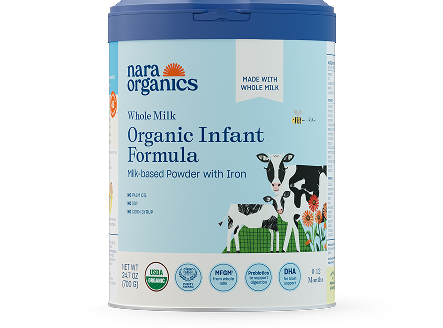
Some infant formulas are made with cows’ milk and others are made with goat milk. Many contain skim milk, or a mix of whole and skim milk. Nara uses only whole milk (no skim), which includes the milk fat globule membrane (MFGM) naturally found in milk fat. Others use whey ingredients that are enriched with MFGM. Some infant formulas don’t include any prebiotics at all, while others like Nara include organic GOS (galactooligosaccharides) to support digestion and soft poops, while some others use a different combination of prebiotics.
Even though some research suggests that tolerance levels are similar across standard cow’s milk-based infant formulas, you may find that your baby responds better to a particular formula.5 Whatever your baby’s unique health and nutrition needs may be, your healthcare professional can help guide you to make the right choice for you and your baby.
Learn more about the different types of infant formula →
How do I transition from one formula to another?
Get advice from your child’s pediatrician before you decide to switch to a new infant formula. There may be some differences between the formulas, and if your baby has any special needs that need to be considered, your healthcare professional will be able to guide you through the transition. Some clinicians may recommend a switch to a new infant formula right away. This is done by replacing all ounces in all future bottles with a new infant formula.
Other times, a healthcare professional may recommend a gradual switch to a new infant formula. This could involve substituting some of the ounces within a bottle (by mixing the existing and new formulas according to the directions on each of the formula labels) or replacing a few bottles each day with a new formula over a period of several days until a baby is fully transitioned to a new formula.
Read more about starting a new formula →
How long is the adjustment period when I give my baby a new formula?
Every baby is different and there’s no exact timeline, but many babies adjust within 1-2 weeks. Ask your baby’s healthcare professional about the transition timeline, and watch for signs that your baby is tolerating the new formula. This can help you know when your baby has fully adjusted.
What might I notice while my baby transitions to a new formula?
If your baby transitions to formula from breastmilk for the first time, or transitions from one formula to another, you may see some changes in their acceptance of the formula. For example, your baby may turn their head away or refuse the bottle of the new formula, which could be a sign they are still adjusting to the new smell and/or taste of the new formula.
You may also notice changes in the amount of gas they produce, how often they spit up, or the color, consistency, and frequency of their poops. You may notice minor fussiness, increased spitting, or more burping. These signs could be misinterpreted as an intolerance, although many minor changes may be normal and temporary.7 Learn more about the causes of infant gas and tips to relieve your baby’s gas.
Talking with your child’s healthcare professional can help you understand if the changes you are seeing are normal or if your child is truly experiencing an adverse reaction to a formula or an ingredient within the formula.
My baby’s poop looks different after beginning a new formula. Is this normal?
The color, consistency, and frequency of your baby’s poop can change when moving from breastmilk to formula or from one formula to another.
For example, if your baby transitions from breastmilk to formula, you may find that your baby’s poops get firmer, a little more green (and less yellow), and that they poop fewer times each day.8 Your baby can also experience changes in stool color, consistency, and frequency when transitioning from one formula to another.
These changes could be the result of your child getting used to a new formula. Infants experience significant variations in stooling patterns depending on their formula, the age when the formula is introduced, the volume they consume, their age and GI development, and the timing and introduction of new foods.
It’s normal for parents to feel concerned about these changes, but they’re usually considered normal.6 If you’re unsure or have questions, it’s best to reach out to your baby’s healthcare professional.
Learn more about baby poop here →
How do I know if my baby has an allergy or an intolerance?
If you're concerned that your baby may have an allergy or an intolerance, discuss this with your child’s healthcare professional immediately.
An allergy involves an immune response, but an intolerance does not involve an immune response.9 Some infants may not tolerate certain formulas due to some enzyme deficiencies.
For example, babies with galactosemia cannot process the sugar galactose; so they cannot have breastmilk or consume standard cows’ milk-based or formulas that contain lactose. Once they start solid foods, they must avoid all foods containing galactose or lactose, including dairy products, and some fruits and vegetables and processed foods.
Infants with diagnosed lactose intolerance or a lactase deficiency cannot digest lactose, the sugar in milk, and need lactose-free formulas or formulas specially designed for lactose intolerance. Discussing this with your baby's pediatrician and using the right formula early, can help support your baby's health and development.9
The most common food allergy in infancy is a cows’ milk allergy.10 Some severe signs of a baby not tolerating an infant formula may include nausea or vomiting, chronic diarrhea, bloody or mucousy stools, bloating, a new rash, not gaining weight appropriately, or if a baby seems like they are in pain.7,10 If you notice any of these signs or any others in your baby, contact your child’s healthcare professional right away.
What else should I be aware of when switching from one infant formula to another?
Aside from differences in ingredients among various infant formulas, the mixing instructions for one formula can differ from another. Always follow the preparation instructions specified on the can of formula that you are currently using and the scoop that came with the can.
When transitioning to Nara Organics formula, Nara’s preparation instructions are slightly different. Our formula uses a 1:1 mixing ratio, meaning: For every 1 fl oz of water, add 1 unpacked, level scoop (4.3 g) of Nara Organics formula powder.
This ensures that your baby gets the right powder-to-water ratio, which is important for nutrition, hydration, and stool consistency. Proper preparation is essential for your baby’s nutrition and safety.
Also, as you and your healthcare professional evaluate your baby’s tolerance to a new infant formula, be aware of anything else that may have changed in your feeding routine.
Changes like new bottles and nipples can impact the flow of liquids and, as a result, how much air your baby swallows at each feeding, which could potentially impact gas.11 Unfortunately, because there isn’t a standardized definition of flow rate across brands, a “slow” nipple from one manufacturer might deliver formula at a speed comparable to a “medium” or “fast” flow nipple from another brand.12
Introducing solids (when your baby is developmentally ready) can also bring about changes in your baby's stooling patterns. If you switch formulas at the same time, it may be more of a challenge to pinpoint what’s causing any changes or intolerances.
What should I do if I am concerned about my baby not tolerating their formula?
Although many babies can transition to a new formula without any problems,7 if you are concerned about your baby not tolerating their formula, you should contact your child’s healthcare professional immediately.
Formula intolerance doesn’t impact the majority of infants
Ultimately, the decision to transition to a new infant formula is one that you should make with your child’s healthcare professional, who can help you evaluate your baby’s unique needs. Keep in mind: it can take some time for babies to get used to new changes in their routine, and babies may need some encouragement during any transition.
If you have questions about Nara Organics, be in touch at hello@nara.com. Our team, including our Registered Dietician, is here to help. 💙